
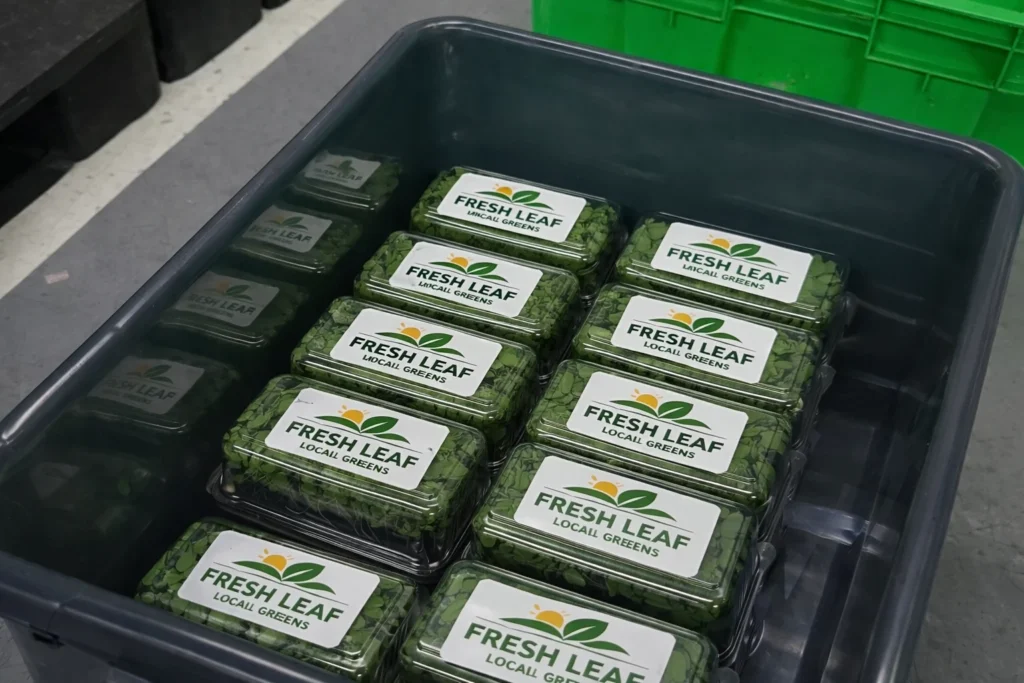
Forget the “spare bedroom” hype of the early 2020s. In 2026, the microgreens industry has matured from a speculative trend into a sophisticated, $2.7 billion pillar of urban AgTech.
The “Green Gold Rush” has ended, giving way to a high-stakes market where survival depends on technological integration and “functional food” branding. Success today isn’t about having a green thumb; it’s about navigating the “Barbell Effect”—where automated mega-farms and hyper-niche artisans thrive while inefficient middle-market growers vanish.
This article strips away the Instagram filters to analyze the cold, hard reality of 2026: the soaring capital requirements, the razor-thin margins of wholesale, and the high-profit truth of “Salad-as-a-Service.”
The “Living Garnish” Service: Subscription Hospitality
The Shift: From Product Delivery to Infrastructure Leasing.
The Problem in 2026
By 2026, the culinary world will have become hyper-sensitive to waste and freshness. The traditional model of delivering cut microgreens in plastic clamshells is failing the high-end sector.
- Degradation: Once cut, a microgreen loses 30% of its volatile oils (flavor) and turgidity (crunch) within 6 hours.
- Waste: Chefs over-order to ensure they have enough, leading to 20% of the product rotting in the walk-in fridge.
- Aesthetics: Plastic clamshells are ugly, unsustainable, and clutter the prep station.
The Business Model
The “Living Garnish” model flips the script. You do not sell the food; you lease the farm. You provide high-end restaurants with “Live-Harvest” countertop units—sleek, small-footprint hydroponic racks that sit directly on the pass or even at the customer’s table.
How It Works:
You operate on a “Farm-as-a-Service” (FaaS) subscription. The restaurant pays a monthly fee (e.g., $800/month).
- Twice-Weekly Service: You visit the restaurant on Tuesdays and Fridays.
- The Swap: You remove the “spent” trays that the chefs have harvested from and slot in fresh, fully grown trays from your central hub.
- Maintenance: You check the water lines, wipe down the unit, and ensure the grow lights are functioning.
The Operational Advantage:
Because the plant remains alive until the second the chef snips it for the plate, shelf life is theoretically infinite (until the plant becomes too woody, which takes weeks). You eliminate the “cold chain” logistics because the product doesn’t need refrigeration—it needs light.
Target Crops:
You focus on visually striking crops that hold their structure.
- Red Veined Sorrel: Looks incredible under restaurant lighting.
- Mustard Frills: Provides a 3D texture that looks great on a “living tray.”
- Nasturtium: The lily-pad shape creates a mini-landscape on the counter.
Financial Viability:
This model creates “sticky” revenue. Once a chef integrates a live grow unit into their workflow (and the diners get used to seeing fresh greens cut tableside), it is very difficult for them to cancel the service. You are no longer a vendor; they can swap for a cheaper one; you are a fixture in their dining room.
The “Green Dust” Lab: Shelf-Stable Nutraceuticals
The Shift: From Perishable Produce to Durable CPG (Consumer Packaged Goods).
The Problem in 2026
The “Fresh Trap” kills most microgreens businesses. You are tethered to a 20-mile radius because your product wilts in 5 days. If you have a bumper crop and no buyers, that inventory goes to the compost pile. In 2026, with energy prices fluctuating, growing food just to throw it away is economic suicide.
The Business Model
The “Green Dust” model targets the booming bio-hacking and functional food market. Instead of selling fresh greens, you process your harvest immediately into freeze-dried powders and functional salts.
The Science (The USP):
By 2026, consumer awareness of Sulforaphane—a compound found in broccoli sprouts that fights inflammation and aging—is mainstream. However, eating 4 cups of sprouts a day is tedious.
- Freeze-Drying: Unlike heat dehydration (which kills enzymes), freeze-drying preserves nearly 98% of the nutrient density and the vibrant green color.
- Concentration: It takes roughly 10lbs of fresh microgreens to make 1lb of powder. You are selling a hyper-concentrated “superfood bomb.”
Product Lines:
- The “Stealth Health” Capsule: Pure broccoli sprout powder in vegan capsules. Marketed to busy tech workers and health optimizers who want the benefits of greens without the salad.
- Gourmet Finishing Salts: Mix freeze-dried Wasabi, Radish, or Arugula powder with high-quality Maldon sea salt. This is shelf-stable for 2 years and shippable globally.
- Smoothie Boosters: Pre-measured sachets of kale and wheatgrass micro-powder.
Operational Reality:
This pivots your business from farming to manufacturing.
- Equipment: You need commercial freeze-dryers (like Harvest Right units), which are a capital expense ($3k–$5k each).
- Regulation: You move from agricultural regulations to food processing regulations (FDA/local health department). This requires a certified commercial kitchen, not a garage.
- Logistics: Your market is now global. You can sell via Amazon, TikTok Shop (or its 2026 equivalent), and direct-to-consumer. You are no longer at the mercy of local chefs’ changing menus.
The Corporate “Farm-Wall” Technician
The Shift: From Sales to Maintenance/Service Contracts.
The Problem in 2026
The “Return to Office” mandates of 2024-2025 created a demand for better workspaces. Companies are competing to make offices feel like sanctuaries to retain talent. “Biophilic Design” (bringing the outdoors in) is standard in Class-A real estate. However, office managers are terrible farmers. They buy expensive “living walls” that inevitably die, grow mold, or leak onto the carpet because no one knows how to maintain the pH balance.
The Business Model
You become the “Pool Boy” of Corporate Agriculture. You do not sell the greens; you sell the competence required to keep them alive.
The Offering:
You install modular vertical farming units in corporate cafeterias, luxury apartment lobbies, and tech campus breakrooms.
- The Hardware: You likely partner with a hardware manufacturer (reseller model) or build custom aesthetic units.
- The Service: The company pays a monthly retainer. You handle everything: seeding, nutrient balancing, IPM (Integrated Pest Management), and harvesting.
- The “Harvest Day” Event: Once a week, you or a technician arrives to harvest the greens and leave them in the cafeteria salad bar for employees. This becomes a “perk” the company offers its staff—”Free, office-grown salad every Wednesday.”
Why It Wins:
- Recession Proofing: Corporate contracts are usually signed annually. This provides a predictable cash flow compared to the volatility of farmers’ markets.
- ESG Credits: Companies in 2026 are obsessed with ESG (Environmental, Social, and Governance) scores. Having an on-site, zero-mile farm contributes to their sustainability goals. You provide them with the data report: “This month, your office saved 40kg of CO2 by growing food on-site.”
- Low Competition: Most microgreens growers want to be farmers, not maintenance technicians. This niche is uncrowded.
The “Chef’s R&D Partner” (Boutique Genetics)
The Shift: From Commodity Crops to Intellectual Property.
The Problem in 2026
The massive automated vertical farms (the “Giants”) have a weakness: they are rigid. Their robots are calibrated for specific tray heights and harvest densities. They grow the “Big 5” (Pea, Sunflower, Radish, Broccoli, Arugula) efficiently, but they cannot pivot quickly.
Top-tier chefs, however, are bored with the Big 5. They want novelty. They want flavors that don’t exist in the supermarket.
The Business Model
You become an “Agile Farmer.” You position your business as an R&D lab for chefs. You grow what the giants refuse to touch.
The Strategy:
- The “Flavor Bible” Meeting: You sit down with a Head Chef and ask, “What flavor is missing from your menu?”
- Custom Cultivation: If they want a garnish that tastes like licorice and looks like a spider, you grow Bronze Fennel. If they want a shocking electric yellow contrast, you grow Popcorn Shoots in total darkness to prevent chlorophyll production (blanched).
- Exclusivity Agreements: You agree to grow “Crystal Lemon Cucumber Microgreens” only for that specific restaurant group in your city. This gives the chef a competitive edge—a unique ingredient their rivals cannot buy.
Operational Reality:
This requires high horticultural skill. You are dealing with lower germination rates, finicky humidity requirements, and expensive, rare seeds.
- Pricing Power: Because you are the only source for these custom items, you dictate the price. You are not competing with the $15/lb pea shoots from the vertical farm; you are selling “Artisan Shiso” at $60/lb.
- Relationship Heavy: This model relies entirely on your relationship with 5–10 key chefs. If the chef moves to a new restaurant, you follow them.
Operational Pillars for Success in 2026
Regardless of which model you choose, the operational baseline has risen. In 2020, you could track your business on a whiteboard. In 2026, you need a “Digital Twin” of your farm.
1. Data-Driven Cultivation
The “feeling” of the grower is replaced by sensors. Successful small farms in 2026 use affordable IoT (Internet of Things) sensors to track VPD (Vapor Pressure Deficit).
- Why? Consistency. If you deliver spicy radish shoots one week and mild ones the next, you lose the contract. Sensors ensure every tray experiences the exact same “stress” to produce the same flavor profile.
2. Hyper-Local SEO & Storytelling
Since “organic” and “local” are now buzzwords used by even the massive corporations, your marketing must be personal.
- Video First: 2026 marketing is video-dominant. Consumers want to see the face behind the farm. A live stream of your harvest, or a “behind the scenes” of the freeze-drying process, builds the trust that massive faceless farms cannot replicate.
3. Sustainable Substrates
Peat moss and coco coir are under scrutiny for environmental impact. The 2026 grower uses renewable substrates like hemp mats or jute pads. This isn’t just eco-friendly; it’s a selling point. Marketing your product as “grown on zero-waste hemp” appeals to the 2026 consumer’s sustainability conscience.
Conclusion: The Middle is Death
The microgreens industry of 2026 is a story of divergence. The middle ground—the generalist grower selling standard trays to standard customers—is a kill zone. The margins are too tight to compete with the giants, and the product is too generic to appeal to the luxury market.
To succeed, you must move to the edges.
- Move to the Luxury Edge by offering “Living Garnishes” and “Custom Genetics.”
- Move to the Tech Edge by becoming a “Farm-Wall Technician.”
- Move to the Health Edge by manufacturing “Green Dust.”
The Gold Rush is over, but the industry is not. It has just shed its amateur skin. For the entrepreneur willing to professionalize, specialize, and treat microgreens as a business rather than a hobby, the $2.69 billion market is ripe for the taking.