
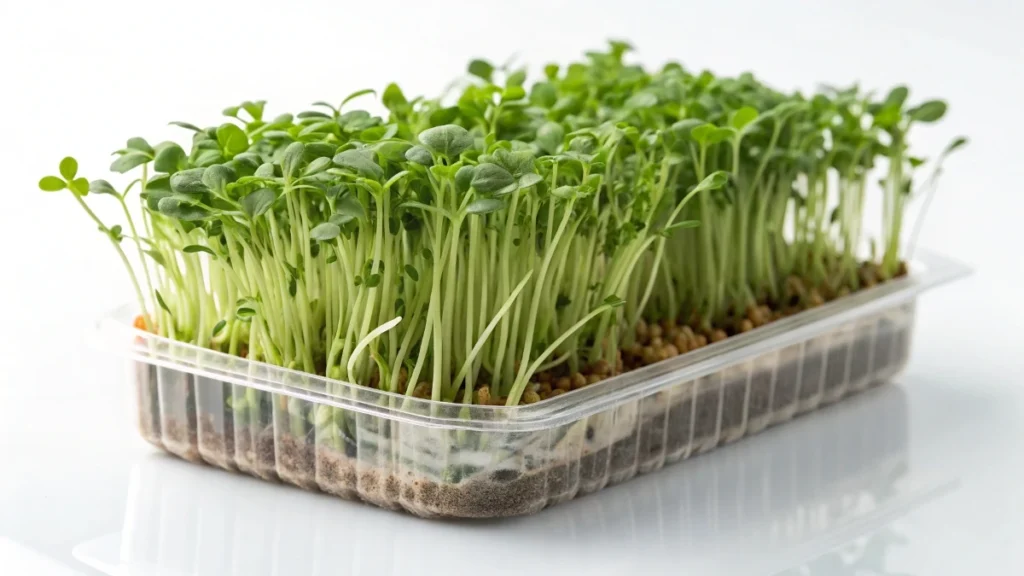
Do microgreens regrow after cutting? Here is the answer for growers at home and in small farms. Most trays are one-and-done because plants are harvested at the cotyledon stage, so little leaf remains to power photosynthesis.
Some crops can return when handled correctly. Pea shoots often send a second flush if you cut above the last leaf. Wheatgrass can regrow because the crop is all leaf tissue.
Expect about half the yield on a second cut and a longer wait, usually around fourteen days. Sunflower, radish, broccoli, kale, and mustard do not come back.
Learn how to harvest for regrowth, when to reseed, and how to plan a weekly supply.
Quick answer: Do microgreens regrow
Most microgreens do not regrow after cutting. They are usually harvested at the cotyledon stage when the seed has already provided most of the energy for growth. After a close harvest, there is not enough leaf area left to collect light, so the plant cannot power new growth. There are two practical exceptions. Pea shoots can regrow when you leave living leaves on the stem, and wheatgrass can send up new blades because it is essentially leaf tissue. Where regrowth does happen, it is slower and lighter than the first cut. Pea shoots commonly need about fourteen days to return, and the second cut is around half of the first harvest. A third cut is smaller again.
Why do most not regrow
Seed energy and the cotyledon stage
Microgreens are sown thick and cut young. Until the first true leaves appear, the plant runs on energy stored in the seed. At the usual harvest point, the stored energy is largely spent. To keep going, the plant must switch to making its own food through photosynthesis.
Photosynthesis needs leaves left behind.
Photosynthesis uses carbon dioxide, water, and light. Leaves capture light and drive the process. When stems are cut near the base, there are no functional leaves left. Without leaf area, the plant cannot make food, and it stalls rather than regrowing. This is why common trays such as radish or broccoli do not come back after they are trimmed short.
What looks like regrowth but is not
After a tray is harvested, you may see new green leaves a few days later. That is usually seed that germinated late or small stems that were missed during the first cut. The cut stubs themselves remain idle. This is not true regrowth from the harvested plants.
🌿 Recommended Microgreens Supplies |
What will and will not regrow
Likely to regrow when handled correctly
Pea shoots can give a second flush if you leave the last set of leaves on each stem. Those remaining leaves keep catching light so the plant can push new shoots. Expect the return to take roughly two weeks, and plan for about fifty percent of the first yield. A third pass is possible but smaller.
Wheatgrass can regrow because the crop is made of leaf blades. Even when you cut low, new blades emerge from the base. Later rounds tend to look more yellow than the first, and they are considered lighter in beneficial nutrients than an initial cutting.
Some tender herbs may send new growth in a home setting if you leave enough leaf surface, but they are less reliable than peas, and the vigor falls off quickly.
Typically, single-harvest crops
Sunflower is a single-harvest crop. Radish, broccoli, kale, and mustard are also single-harvest crops. When these are cut, there is not enough leaf tissue left to power another round.
How to harvest if you want any chance of regrowth
Pea shoots
Cut above the last leaf set so each stem keeps some living leaves. Use clean, sharp scissors or a knife so the cut is neat. Avoid scalping the stem. If you leave bare stems without leaves, the plant cannot return.
Wheatgrass
A low, clean cut is fine. New blades will emerge from the base. Plan for a paler color on later rounds and keep expectations modest for nutrition.
Clean technique that supports a second round
Use clean tools and tidy cuts. Aim to cut just above the growing medium rather than disturbing the roots. Keep the growing area well-lit and well-ventilated, and water with care after the cut. A simple practice is to hold back water for at least six hours before harvest, which gives a drier, cleaner cut and helps post-harvest quality.
Timeline yield and nutrition
How long does regrowth takes
Pea shoots need about fourteen days to grow back to a usable height after a proper cut that leaves leaves on the stem. Wheatgrass reappears within several days but takes time to reach the same cutting height as before.
What to expect on the second cut
Second-cut pea shoots typically give about half the fresh weight of the first pass. The third round drops further. Wheatgrass continues to produce, but the stand is thinner, and the color is more yellow than the first cutting.
Nutrition reality
The first harvest has the highest nutrient density because the young plant is supported by the energy stored in the seed and early photosynthesis. Later rounds draw from a depleted base and have less vigor. Wheatgrass after the first cutting can be less rich in the compounds people seek from fresh juice. For consistent yield and more reliable nutrition, many growers choose to reseed rather than rely on returns.
Home growers and business growers: what is smarter
For home use, the goal is steady greens with little fuss. If you like pea shoots, you can let them come back once by cutting above the last leaf and leaving some leaf area to keep taking in light. Plan for around two weeks before they are ready again, and expect about half of the first harvest. Wheatgrass will send up new blades from the base even after a low cut, although the color often turns more yellow, and the later cut is considered lighter in beneficial compounds. If you enjoy harvesting small amounts often, this approach works well at home.
For a business, the priorities are schedule predictability, yield per tray, and consistent quality. Regrowing peas takes about two extra weeks for a smaller second cut. That means a tray sits in place longer while producing less than the first round. Sunflower, radish, broccoli, kale, and mustard do not return after a cut, so holding trays for a second round gives no benefit. Re-seeding each cycle keeps growth timing uniform and nutrition more consistent, which is easier to plan for deliveries and reduces surprises in weight.
Post-harvest care that extends freshness and prevents mold
Clean handling right after the cut makes a visible difference. Remove loose stems, hulls, and leaves from the surface of the growing medium so they do not trap moisture and feed mold. Store the fresh-cut greens in a container lined with a dry paper towel. The towel pulls extra moisture away from the leaves and helps them stay crisp longer.
Growing on a clean medium also helps. Coco coir is a common choice since it is a processed coconut fiber. A little coriander in a salad is not harmful, yet it tastes like soil, so careful trimming and post-cut cleanup are worth the effort. Keep the growing area well-lit with good air movement and water in a measured way so the crop dries quickly after each watering. A simple practice is to stop watering for at least six hours before the cut. The leaves are drier at harvest, and the stored greens keep their texture better in the container.
Common mistakes and simple fixes
Cutting peas too low is the most common reason a second flush never shows. If no leaves remain, the plant cannot collect light, and it stalls. Leave the last set of leaves, and the plant can push new shoots.
Watering immediately before the cut leaves the greens heavy with moisture, which shortens storage life. Hold back water for six hours before the harvest window to improve texture and shelf life.
Mistaking late sprouts or missed stems for true regrowth leads to false expectations. After a cut, you might see new green in the tray, but those are usually seeds that germinated later or tiny stems missed during the first pass. The cut stubs themselves do not start growing again for the crops that are one-and-done.
Poor airflow and debris left on the medium invite mold. Keep ventilation steady and clear the tray surface right after harvesting. Use clean, sharp scissors or a knife so stems are sliced cleanly rather than crushed.
A continuity plan so you never run out.
A simple two-tray rotation keeps a steady supply. While you are eating from one tray, you plant the next tray so you do not face a week with no greens. If you like a seven-day rhythm, sow tray one and light it. On day seven, harvest tray one and sow tray two. On day fourteen, harvest tray two and reseed tray one. Add the six-hour no-water window before each harvest for crisper texture. If you are testing whether specific crops will return, such as peas, you can keep one corner for a second flush while the rest of the space follows the reseed rhythm. This plan answers the common search question do microgreens regrow by making the supply independent of regrowth.
Fast FAQ
Do microgreens regrow after cutting
Most do not. Pea shoots can return when you leave leaves on the stem, and wheatgrass can push new blades. Sunflower, radish, broccoli, kale, and mustard are single-harvest crops.
How long does a second flush take for peas?
About fourteen days to reach a usable height when the last leaf is left on each stem.
What yield should I expect on a second cut of peas
Around half of the first harvest is a common result. A third round gives even less.
Is a second round as nutritious as the first
The first cut is the most nutrient-dense. Later rounds are less vigorous, and wheatgrass after the first cut often looks more yellow and is considered lighter in beneficial nutrients.
What is the best approach for a steady supply?
Use a two-tray rotation and reseed on schedule. If you enjoy experimenting with peas, you can keep a portion for a second flush while the rest follows the weekly reseed plan.