
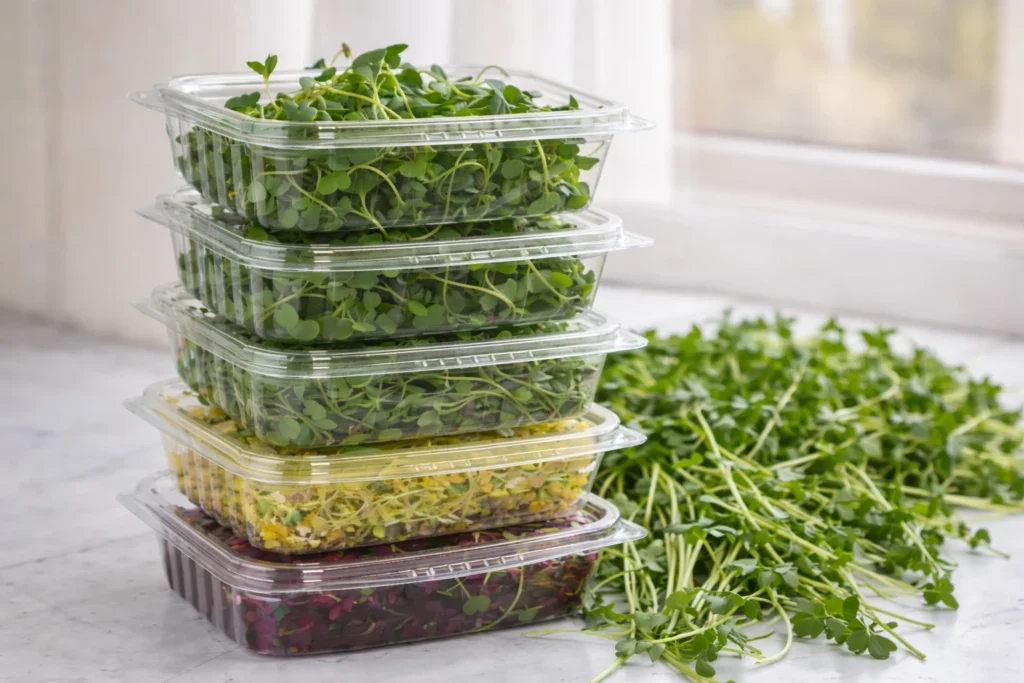
The year is 2026, and the landscape of agriculture looks drastically different from what it did even five years ago. We’ve moved past the “fad” stage where microgreens were merely a colorful garnish on a $50 steak. Today, they are a fundamental pillar of the functional food movement.
If you are standing on the sidelines wondering if the window of opportunity has closed, the answer is a nuanced no—but the rules of the game have changed. In 2026, profitability isn’t found in just “growing plants”; it’s found in process optimization, nutrient density verification, and hyper-local branding.
The 2026 Market Reality: Maturity Meets Demand
Back in 2020, you could make a decent profit just by being the “only person in town” with fresh sunflower shoots. In 2026, the market is more crowded, but the pie is significantly larger.
Why Demand is Peaking Now:
- The Rise of “Biohacking” Nutrition: Consumers are no longer satisfied with “organic.” They want “optimized.” Since microgreens can contain up to 40x the vitamins of mature plants, they have become the “natural supplement” of choice for the health-conscious.
- Supply Chain Resilience: With traditional outdoor farming facing more frequent climate-related disruptions, the controlled environment of a microgreen farm offers a stability that grocery stores and restaurants are willing to pay a premium for.
- Institutional Adoption: It’s not just high-end bistros anymore. Hospital cafeterias, school meal programs, and corporate wellness centers have integrated microgreens for their sheer density of phytonutrients.
The Profitability Equation
Is it still profitable? Let’s look at the math. In 2026, the average cost of a 1020 tray (the industry standard) remains relatively stable, but energy costs and labor have risen.
To determine your potential, we use the Profit Margin Per Tray (PMP) formula:
$$PMP = R – (S + M + L + E + O)$$
Where:
- $R$ = Revenue per tray
- $S$ = Seed cost
- $M$ = Medium/Substrate cost
- $L$ = Labor (Harvesting/Seeding)
- $E$ = Energy (LEDs/Climate Control)
- $O$ = Overhead (Rent/Marketing)
2026 Cost-Revenue Comparison Table
| Variable | 2021 Average | 2026 Estimate | Strategy for Profit |
| Price per Tray | $20 – $25 | $30 – $45 | Focus on “Medical Grade” or “Gourmet Mixes” |
| Energy Cost | $0.12/kWh | $0.22/kWh | Use AI-timed lighting and high-efficiency LEDs |
| Labor (Manual) | $15/hr | $22/hr | Partial automation (auto-seeders/washers) |
| Consumer Reach | Local Farmers Market | D2C Subscriptions | Use app-based recurring revenue models |
Pro Tip: In 2026, the real money is in the Subscription Model. Selling a one-off tray to a chef is fine, but securing 100 local families on a weekly $35 “Superfood Box” subscription provides the predictable cash flow needed to scale.
The 2026 Tech Stack: Efficiency is the Only Way Forward
If you’re still hand-watering with a spray bottle, you aren’t running a business; you’re enjoying a hobby. To remain profitable in 2026, you must embrace the “Micro-Farm 4.0” approach.
1. AI-Driven Environmental Control
Modern sensors now allow growers to modulate the spectrum of their LEDs based on the growth stage. This isn’t just for yield; it’s for flavor. By stressing a radish microgreen with specific blue-light frequencies in the final 24 hours, you can increase its “spice” profile, creating a proprietary flavor that chefs can’t get anywhere else.
2. Vertical Density
Profitability in 2026 is measured by the cubic foot, not the square foot. Successful farms are now utilizing 8-tier to 10-tier racking systems with integrated “ebb and flow” hydroponics. This reduces water waste by 90% compared to traditional soil-based tray methods.
3. Traceability via Blockchain
Modern consumers in 2026 are savvy. They want to scan a QR code on their arugula and see the harvest timestamp, the nutrient profile, and the carbon footprint of the delivery. Providing this transparency allows you to justify a 15–20% price hike over generic grocery store brands.
The Competitive Edge: Finding Your Niche
In 2026, “Peas and Radish” are the commodities. If you want high margins, you have to look at the “Exotics.”
- Micro-Cantaloupe: Tastes exactly like the fruit but in a tiny, nutrient-dense leaf.
- Micro-Wasabi: Extremely high demand in the burgeoning high-end sushi market.
- Targeted Mixes: “The Brain Boost Mix” (rich in Lutein) or “The Recovery Mix” (high in Sulforaphane).
The Verdict: The “Hobbyist Gap”
The microgreens business is absolutely profitable in 2026, but the “barrier to entry” has moved. It is no longer enough to be a good grower; you must be a good data manager and marketer.
The “Hobbyist Gap” has widened. Those who fail to automate and those who don’t build a direct relationship with their consumers will be squeezed out by rising costs. However, for the entrepreneur who treats their farm like a high-tech lab and their brand like a lifestyle, the margins remain some of the highest in all of agriculture.