
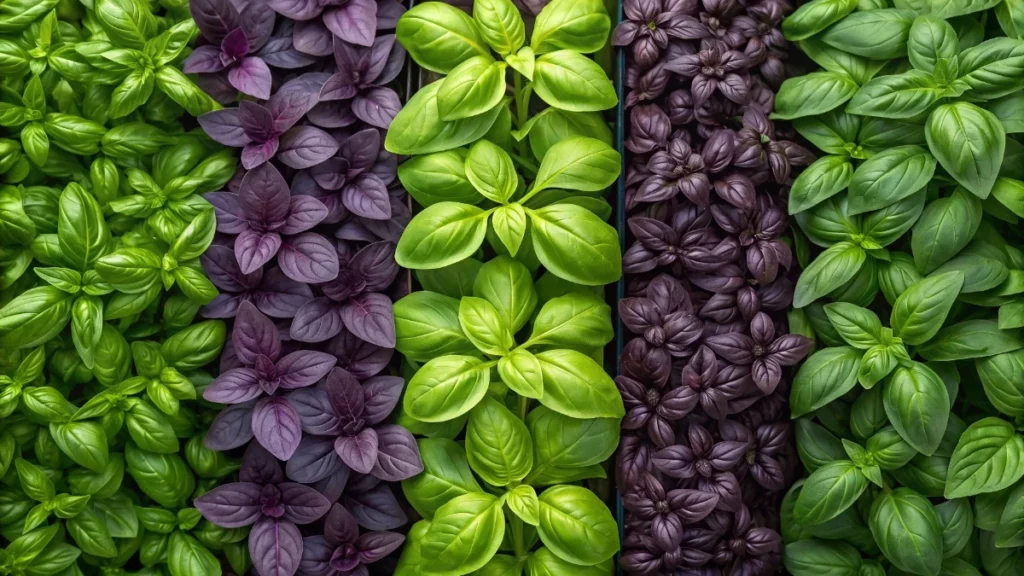
Basil is one of those herbs that can change a whole meal with just a pinch. When you grow it as microgreens, you get that same familiar basil punch, only brighter and more concentrated because you’re harvesting while the stems are still soft and the leaves are young.
Basil microgreens are cut early, usually around the first true leaf stage, so they stay tender and aromatic. They are also a smart choice for home growers because a small tray can supply multiple meals, and the flavor is strong enough that you don’t need huge portions. If you love pesto, pasta, eggs, soups, or fresh bowls, basil microgreens fit right in.
Below are 8 top basil microgreens varieties, what they taste like, how they grow, and how to use them.
8 Top Basil Microgreens Varieties
1) Purple Basil Microgreens
Purple basil microgreens are grown for color as much as flavor. The leaves carry a deep purple tone thanks to anthocyanins, which are the same type of pigments found in many purple fruits and vegetables.
Flavor
Herbal, slightly spicy, with a clove-like warmth. It adds depth rather than sweetness.
Best uses
Caprese plates, pizzas, tomato soup, grain bowls, and cocktails, where you want a bold garnish.
Growing notes
Purple basil likes warmth and steady moisture. It can germinate a little slower than fast brassica microgreens, so patience helps. Give it good light after germination if you want a stronger color.
2) Lemon Basil Microgreens
Lemon basil microgreens are the “fresh squeeze” option. They taste like basil with a clear citrus lift, so even simple meals feel lighter.
Flavor
Bright basil with a lemony edge.
Best uses
Fish, chicken, summer salads, fruit bowls, sparkling water, and citrusy dressings.
Growing notes
Keep the surface evenly moist, not soaked. Lemon basil does well in trays under grow lights because the flavor stays clean when the plants are not stressed.
🌿 Recommended Microgreens Supplies |
3) Thai Basil Microgreens
Thai basil microgreens lean into that licorice-anise profile people love in Southeast Asian cooking.
Flavor
Anise-like, slightly spicy, and very aromatic.
Best uses
Pho, stir fries, curry bowls, noodle soups, spring rolls, and coconut-based dishes.
Growing notes
Warm temperatures help. Once they’re under lights, keep airflow moving so the canopy stays dry on top. Thai basil is flavorful even in small servings, so it’s a great “finisher” microgreen.
4) Dark Opal Basil Microgreens
Dark Opal is a favorite for growers because it looks dramatic and sells well. It’s also one of the basil types people remember after one bite.
Flavor
Slightly sweet, earthy, and rich. Less sharp than some purple basil, but still bold.
Best uses
Pesto, pasta, salads, roasted vegetables, cheese boards, and “fancy toast” toppings.
Growing notes
Dark Opal basil seeds can develop a sticky gel coat when wet, so avoid blasting with heavy water right after sowing. Pre-moisten the medium, sow evenly, then mist gently.
5) Holy Basil (Tulsi) Microgreens
Tulsi has a strong herbal personality. Some people love it immediately, others prefer it blended into smoothies or tea-like mixes.
Flavor
Peppery, slightly sweet, with a medicinal herbal note.
Best uses
Smoothies, herbal drinks, light soups, and wellness-style bowls.
Growing notes
Tulsi is typically grown the same way as other basil microgreens: warm temps, even moisture, and good light after sprouting. Because the flavor is intense, it’s often best used in small amounts until you find your sweet spot.
6) Genovese Basil Microgreens
Genovese is the classic “Italian basil” taste most people picture when they hear basil.
Flavor
Sweet, balanced, and familiar. Clean basil aroma without being overpowering.
Best uses
Pesto, pasta, pizza, tomato dishes, eggs, and sandwiches.
Growing notes
One of the easiest basil types to start with. It performs well in soil or a fine seed-starting mix, and it responds nicely to consistent light. Harvest when the aroma peaks, not when the stems get tall and leggy.
7) Sweet Basil Microgreens
Sweet basil microgreens are gentle and crowd-pleasing. If you’re growing for family meals, this one rarely disappoints.
Flavor
Mild, sweet basil with soft herbal notes.
Best uses
Salads, wraps, pasta, omelets, and homemade herb oils.
Growing notes
Sweet basil is sensitive to overwatering. A good rule is a moist medium with a dry-feeling canopy. Bottom watering helps reduce mold and keeps leaves clean.
8) Red Basil Microgreens
Red basil microgreens are often used when you want something that looks special but still tastes like basil.
Flavor
Earthy basil with a mild peppery bite.
Best uses
Salads, appetizers, soups, cream sauces, and garnish for plated meals.
Growing notes
Color improves with stronger light. If your tray stays too dim, red basil can look more green than red. Keep the light close enough to prevent stretch, but not so close that it dries the surface too fast.
Best Growing Tips for Basil Microgreens
Use a smooth, fine growing medium.
Basil seeds are tiny, and an uneven surface leads to uneven germination. Use a fine potting mix or seed-starting mix and level it well. Aim for a shallow layer that holds moisture without staying soggy.
Keep moisture steady, not heavy.
Basil loves consistent moisture, but it hates being waterlogged. Too much water encourages damping-off and mold. Pre-moisten the medium, sow evenly, mist gently, and switch to bottom watering once roots establish.
Light and temperature matter more than people think
Basil is a warm-season herb. Most varieties prefer warm room temperatures for dependable germination, then strong, even light for sturdy growth and better color.
A practical target:
- Warm germination zone
- 12 to 16 hours of light daily once sprouted
Harvest at the right moment
Basil microgreens are best when they’re tender and fragrant. Cut just above the soil line with clean scissors once you see the first true leaves starting, and the aroma smells strong and “basil-forward.” Waiting too long can make stems tougher and flavor heavier.
Nutritional benefits of basil microgreens
Basil microgreens contribute vitamins and plant compounds in small servings, especially when eaten fresh. Purple and red types also contain anthocyanin pigments, which are antioxidant compounds found in many deeply colored plants. Basil also carries aromatic oils that make it feel intense even in tiny amounts, which is one reason people use it to boost flavor without needing extra salt.